
No items found.
経堂の街に立地する小規模なおにぎり店を対象に、内装およびファサードの計画を行った。
施主が思い描いていたのは、「経堂の街でおいしいおにぎりを食べられる場所」を、無理のない規模感で立ち上げることであった。大きな投資や完成形を前提とせず、ローカルスケールから始め、街の状況や使われ方に応じて変化していく余地を残す。その考え方が、店舗の構成やスケールに反映されている。
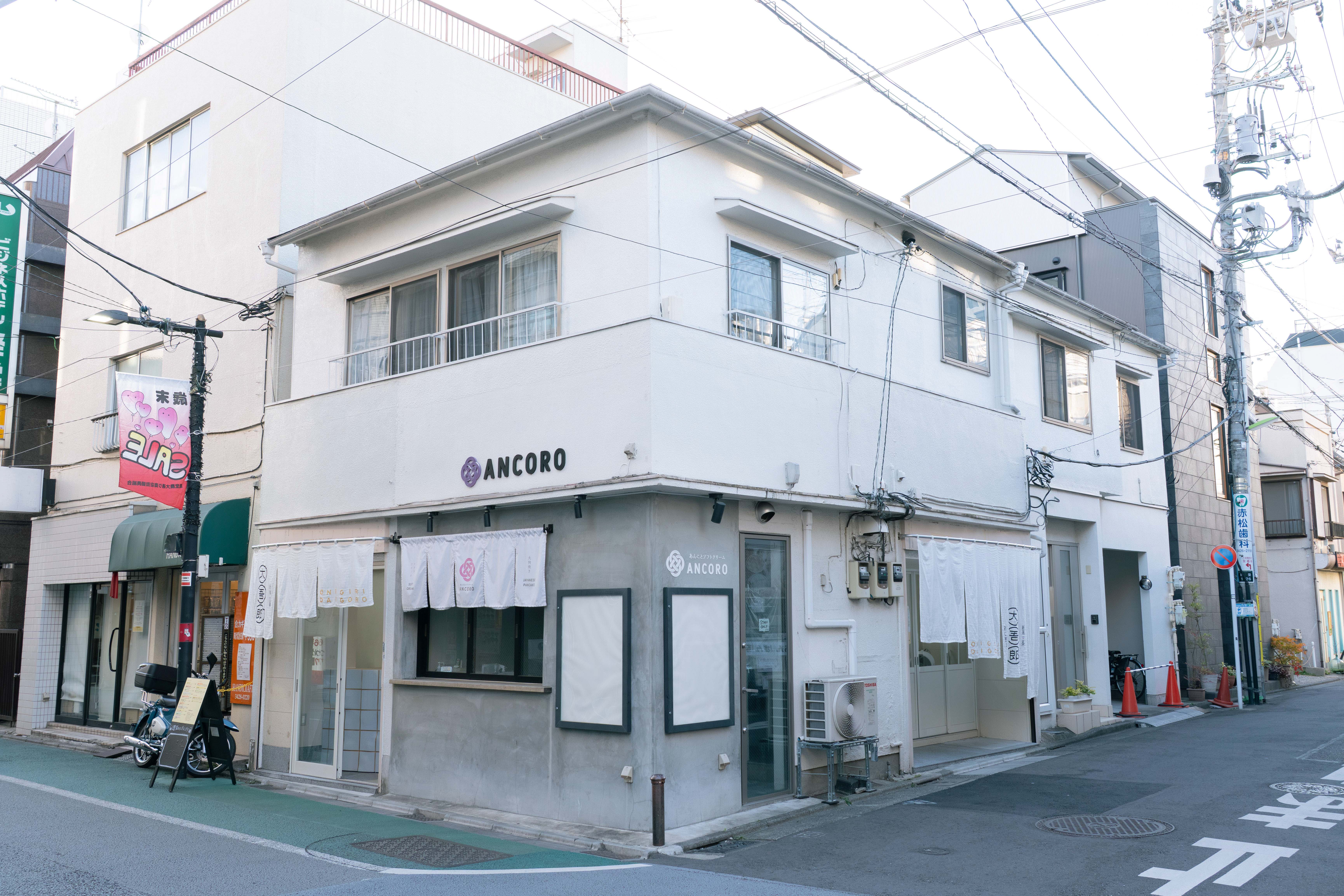

敷地は農大通りの十字交差点に面し、敷地分割の結果として生じたL字型平面の物件である。二方向に分かれた間口という条件を、街との関係をつくる手がかりとして捉え、動線や視線を引き込みながら、将来的な拡張にも対応し得る柔軟な店舗空間のあり方を探った。
平面構成のガイドとして、径の異なる二つの円を設定し、以下の二つの要素を配置している。
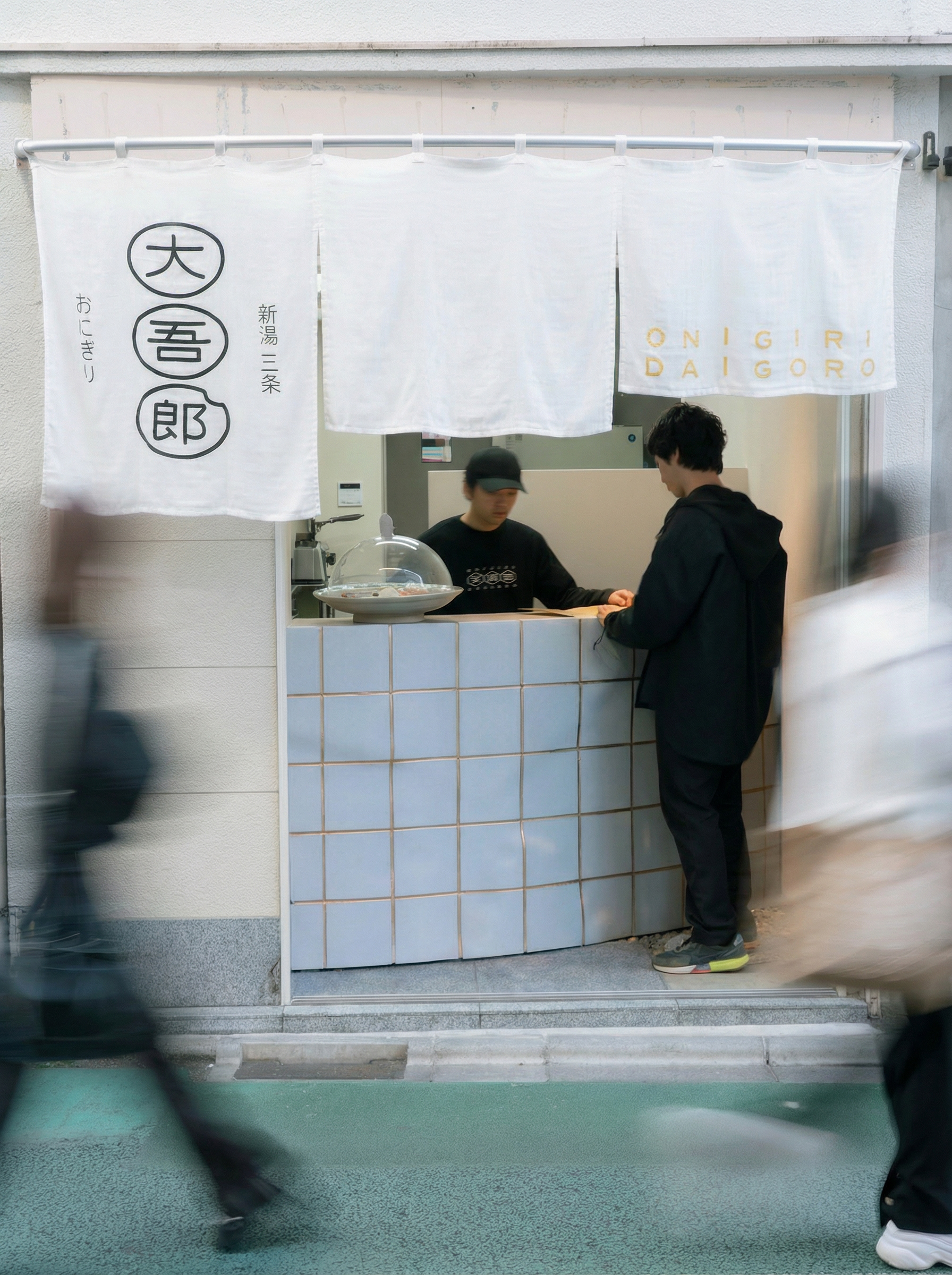
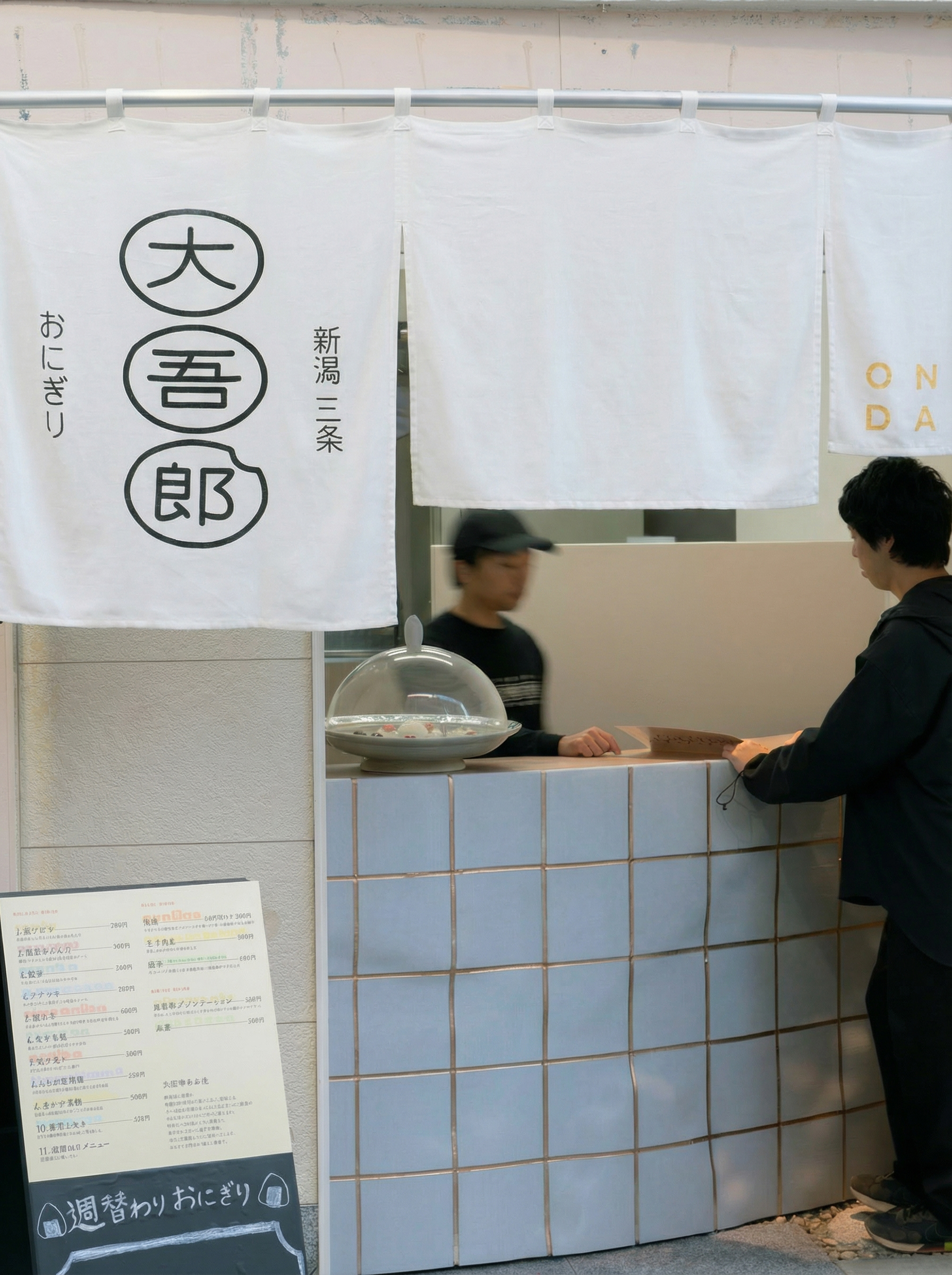
① テイクアウトカウンター兼イートイン配膳カウンター
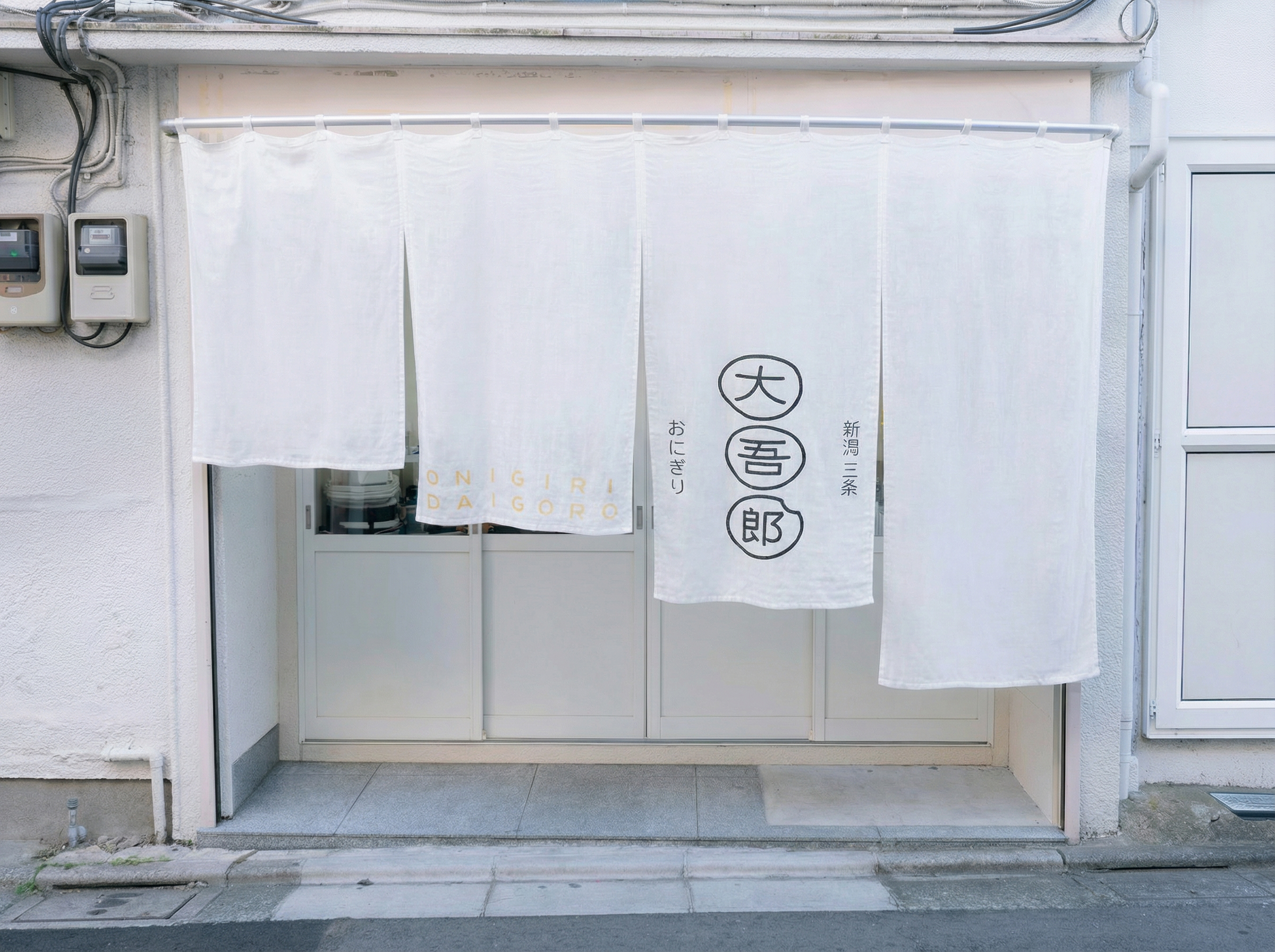
② ファサードに設えた暖簾
これらの要素によって、内外の関係性や人の流れを緩やかに規定している。カウンターは、円弧の内外によってテイクアウト店舗、厨房、余白(将来的なイートインスペース)をゾーニングし、暖簾は、店内と街との境界を明確に区切るのではなく、気配が行き交う中間領域を演出することを意図している。
カウンターの立面には、平面円弧のRに合わせて3Dプリンターで製作したタイルを採用し、通りに面して現れるこの立面を、街からの視線を受け止めるフォーカルエレメントとして位置づけている。また、交差点から視認できる二つの離れた間口が同一の店舗として認識されるよう、暖簾には連続性を感じさせるデザインを施した。
点として始まる営みが街の中で徐々に定着し、波紋のように広がっていくことを想定し、空間の拡張性としての余白を残している。
This project involves theinterior and façade design of a small-scale onigiri shop located in the Kyodoneighborhood of Tokyo. The client envisioned establishing a place where peoplecould enjoy good onigiri within the local community, starting from a manageableand realistic scale. Rather than assuming a large initial investment or apredetermined final form, the project begins at a local scale and allows roomfor change in response to evolving patterns of use and the surrounding urbancontext. This approach is reflected in both the spatial composition and overallscale of the shop.
The site faces a four-wayintersection along Nodai-dori and consists of an L-shaped plan formed as aresult of land subdivision. The condition of having two separate streetfrontages was interpreted as a means of engaging with the surrounding urbanfabric. By drawing in pedestrian movement and lines of sight, the spatialconfiguration explores a flexible shop layout capable of accommodating futureexpansion.
As a guiding framework forthe plan, two concentric circles of differing radii were introduced, organizingtwo primary elements:
(1) a take-out counter that also functions asa serving counter for eat-in use, and
(2) noren curtains installed along the facade.The curved counter uses its inner and outer arcs to zone the take-out area,kitchen, and an area of spatial reserve intended for potential future eat-inuse. The noren, rather than clearly separating the interior from the street,are intended to create an intermediate zone through which presence andatmosphere can pass between inside and outside.
The elevation of thecounter is finished with custom tiles fabricated using a 3D printer, eachshaped to match the radius of the curved plan. Positioned as a focal elementfacing the street, this surface receives the gaze of passersby and contributesto the shop’s visibility within the intersection. In addition, the noren weredesigned with visual continuity so that the two physically separated entranceswould be perceived as belonging to a single shop.
Anticipating that anactivity beginning as a single point will gradually take root in theneighborhood and spread outward like ripples, the space retains areas ofopenness as spatial reserve, allowing for future expansion.


